One flag capture the flag strips the game down to a single target in the middle. One flag, dead center, and two teams racing for it at once. Players sprint, dodge, and fight for the same prize instead of raiding two separate bases. It’s fast, even, and great when teams aren’t the same skill.
One flag capture the flag places a single neutral flag at the center line, and both teams race to grab it and carry it home. There’s no flag to defend in your own base, so the whole game flips to offense. You win by getting the center flag back to your side without being tagged.
| Players | 10-30, split into two even teams |
| Time | 5-10 minutes per round |
| Ages | 7 and up |
| Space | Backyard, park, or field with a clear center |
| Gear | 1 flag, cones or rope, 2 jails, team colors |
| Best for | Uneven teams and fast, short rounds |
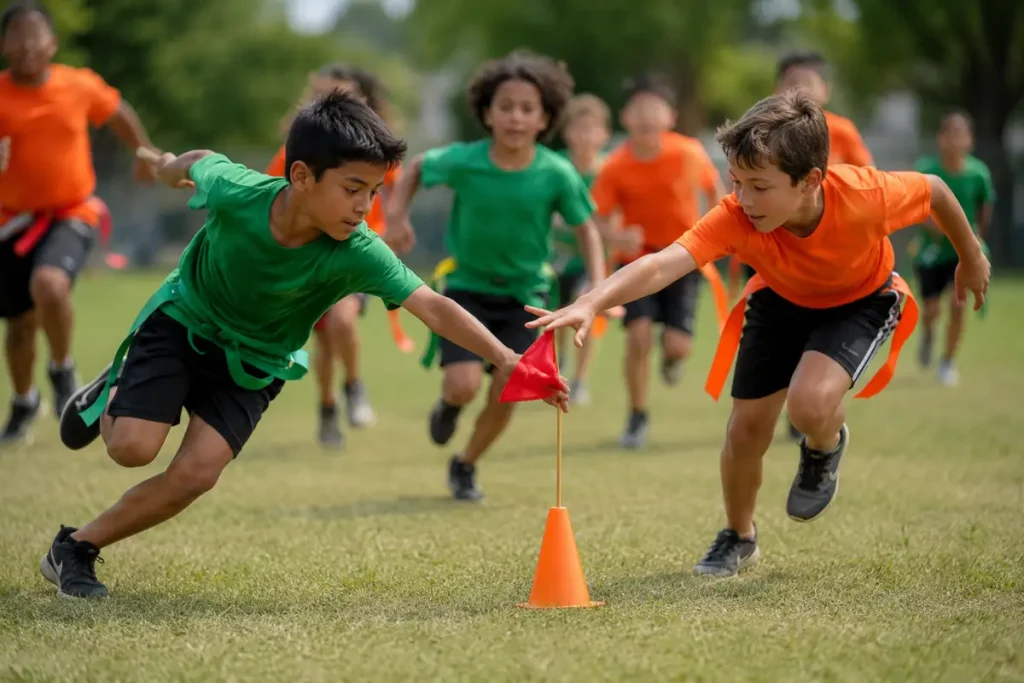
What Changes With One Flag
One flag capture the flag keeps the core of the classic game. Tagging, jail, freeing, the safety radius, all of it holds. For those, read the full capture the flag rules on our main guide. This post covers only what the single flag changes.
Four things shift once there’s one flag instead of two. Nobody guards a home flag, so both teams push forward. The center becomes the hot spot. A tagged carrier drops the flag where they stand. And the game rewards speed over defense.
What You Need
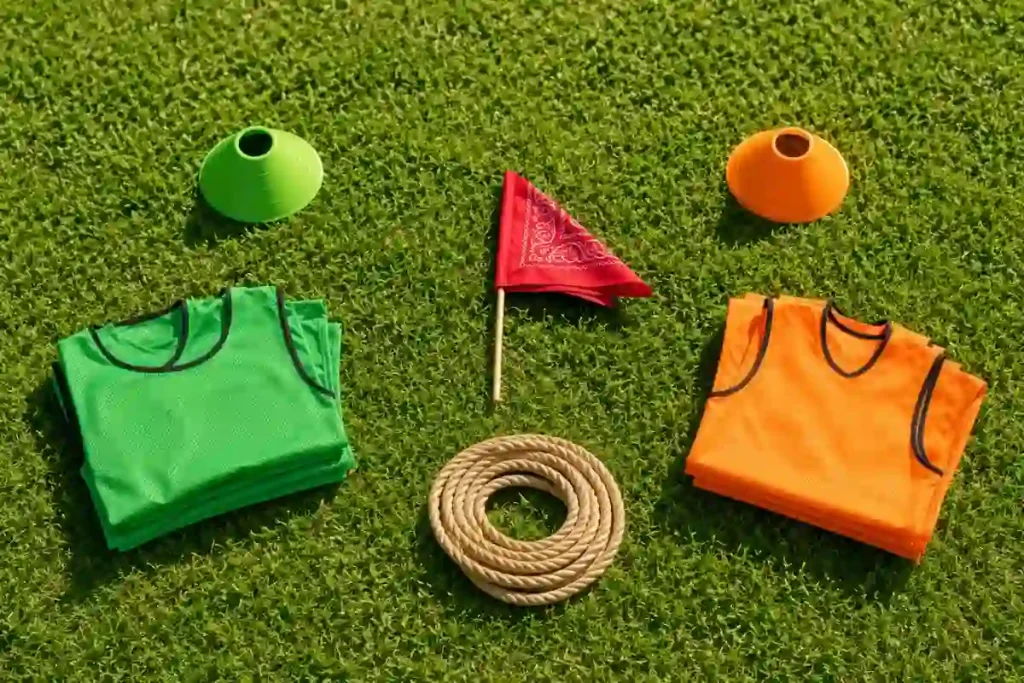
In one flag capture the flag, the gear list actually shrinks, since you only need one flag.
- One flag for the center. A bandana, ball, or beanbag works fine.
- Cones or rope to mark the center spot and the two home lines.
- Two jails, one on each side, same as the classic game.
- Two team colors so nobody tags a teammate in the scramble.
- A referee for the center, since the first grab gets contested most.
One detail most guides skip: mark the exact center spot with a cone or hoop, not just a rough middle. Both teams sprint for it at once, so a clear spot settles who reached it first.
How To Set Up A One-Flag Game
One flag capture the flag differs from the classic game only in the center flag and scoring, so only those steps are here. For jail rules and tagging, use the full capture the flag rules.
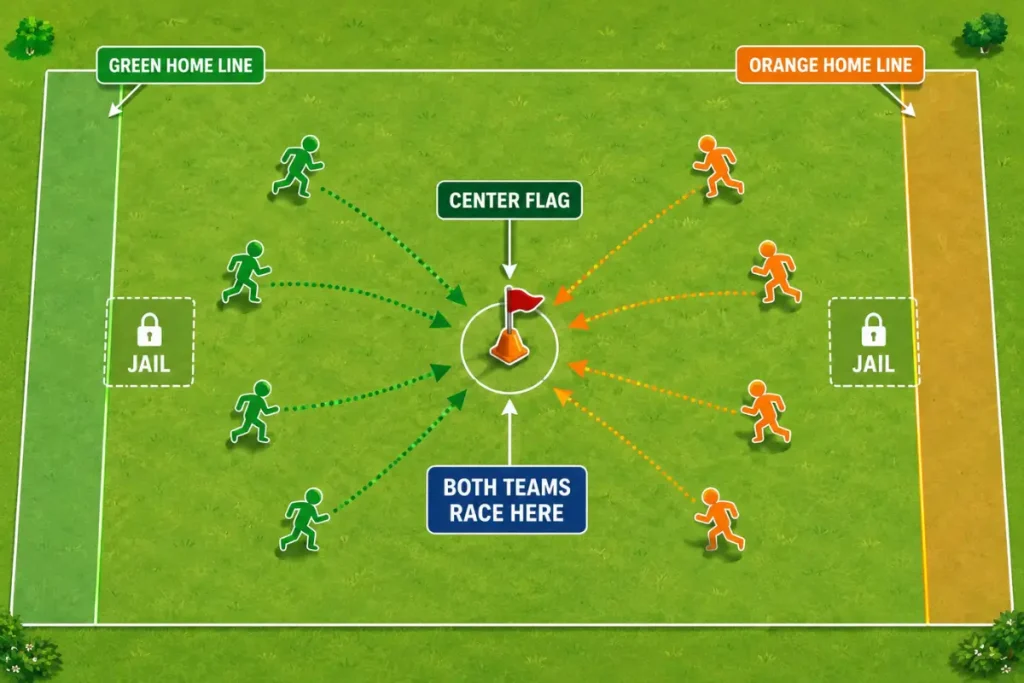
- Mark the center flag spot. Put a cone or hoop at the exact middle, and set the flag on it.
- Draw each team’s home line. A team scores by carrying the flag back across its own line.
- Set a jail on each side. Tagged players go to the enemy jail, same as the base game.
- Agree the dropped-flag rule. Decide if a tagged carrier drops the flag where they stand, or it resets to center.
- Line both teams up. Start each team behind its home line, so the race to the flag is even.
How One Flag Changes The Game
Everyone goes on offense
In one flag capture the flag, no team has a flag to guard at home. Both teams charge the center, so the game runs faster and more open than the two-flag version. Defense still matters, but only to stop the carrier, not to protect a base.
The center is the hot spot
The first grab happens at the middle, where both teams arrive at once. That makes the center the most contested spot on the field. A referee there helps, since a tie at the flag causes the most arguments.
A dropped flag drifts
When a carrier is tagged, the flag drops where they stood. Over time it drifts toward whichever side keeps pushing. This is the rule that makes one flag capture the flag swingy, and you decide it before kickoff.
Speed beats defense
With no home flag to guard, fast runners rule. A team that stacks quick players near the center often grabs first. It’s why this version suits uneven teams, since a weaker side can load up on speed and still compete.
Common One-Flag Disputes And How To Settle Them
A single center flag causes arguments the two-flag game never sees. Here are the four that come up most in one flag capture the flag, and how to settle each fast.
“We grabbed it at the same time.” A tie at the center is why you put a referee there. Their call is final, and if it’s truly even, reset and re-race the flag.
“Where does a dropped flag go?” You set this at kickoff. Either it stays where the carrier was tagged, or it resets to center. Say which before play, since it changes the whole game.
“They collided with me at the flag.” Two teams sprinting one spot means contact. Keep the grab to a reach, not a shove, and a referee sits anyone who barges.
“The carrier stepped out of bounds.” A carrier who crosses the line drops the flag. It goes back to center or the tag spot under your rule. Mark the boundary clearly first.
Playing It Safe In A One-Flag Game
One flag capture the flag sends both teams at the same spot, which raises the collision risk, so a few rules matter more here.
- Give the center grab a light reach only, never a tackle or a shove.
- Watch for head-on collisions, since both teams arrive at the middle together.
- Keep tags to a light two-hand touch, not a grab.
- Space the start lines far enough back that the sprint has room.
- Put a referee at the center to call the first grab and stop barging.
- Clear the middle of anything hard to trip on before you start.
Related Quick And Even-Team Twists
| One-Flag Nerf | Same center flag, but a dart hit replaces the tag. Cover matters near the middle. |
| Freeze center | A tagged carrier freezes, and the flag stays put until a teammate frees them. |
| Timed rounds | Reset the flag to center every few minutes to keep the game moving. |
| 4-base | Four teams, four flags. The opposite idea, spreading the action out for big crowds. |
| Nighttime capture the flag | Run the one-flag race after dark with a glowing center flag. |
Strategy Tips For One-Flag Play
These win one flag capture the flag specifically. Speed and timing beat numbers here.
- Put your fastest player on the first sprint to the center.
- Send a second runner just behind, ready to grab a dropped flag.
- Don’t send everyone forward, since the carrier needs a tagger cleared ahead.
- Peel one defender back to catch the enemy carrier on the return.
- Time your grab a beat late if the center is a scrum, then swoop in.
- Free your jailed players fast, since numbers near the center still help.
One Flag Capture The Flag FAQ
How do you play one flag capture the flag?
Place a single flag at the center line. Both teams race to grab it and carry it back across their own home line. There’s no home flag to defend, so both teams attack. A tagged carrier drops the flag, and the first team to get it home wins.
Where does the flag go when the carrier is tagged?
You decide at kickoff. In one version the flag stays where the carrier was tagged, so it drifts across the field. In the other, it resets to the center spot. Pick one before play, since it changes the whole game.
Why play one flag instead of two?
It’s faster, more even, and good for uneven teams. With no home flag to guard, a weaker side can load up on speed and still race for the center. It also suits smaller groups and shorter rounds.
Is one flag capture the flag good for uneven teams?
Yes, that’s its main strength. Because speed matters more than defense, a less experienced team can compete by putting fast players on the center sprint, rather than being ground down defending a base.
How do you settle a tie at the center flag?
Put a referee at the middle before you start. If two players reach the flag together, the referee’s call is final. A true tie means you reset and re-race for it.
Grab One Flag And Line Up Two Teams
Set a flag in the middle, mark two home lines, and race for it. New to the game? Start with our beginner capture the flag rules first. Want more ways to play? Browse our capture the flag guides and pick your next round.
